
Clay County Arrest Warrants Explained
Iowa Code Chapter 804 sets the machinery in motion. A complaint goes before a magistrate, who weighs probable cause. That standard is factual: reason to believe an offense happened and that the person named or described committed it. When the showing holds, the magistrate issues an arrest warrant. Sometimes a citation is allowed instead. From there the warrant is directed to peace officers and describes both the person and the alleged offense. It may carry an endorsed bail order, though any amount and type depend on the case. Reading Clay County arrest warrant records works best when you keep these pieces straight: a complaint makes claims, a warrant return logs a procedural event, and only the court's later rulings settle anything more.
Clay County Arrest Warrant Probable Cause
An arrest warrant never starts with a public list. It starts with a judicial decision. The complaint or its supporting affidavit lays out the alleged facts, and a judge or magistrate tests those facts against the legal standard. If it holds, the warrant commands a peace officer to arrest the person described and bring them into the court process. Don't assume the whole probable-cause file is public, though. An online docket may show a complaint, a charge, a warrant issue, or a later return while an affidavit stays sealed or restricted. Fill that gap with a phone call, not a guess. The Clay County Clerk can explain which events appear in the public docket, though staff won't give legal advice or predict a case's result. The Iowa Court Rules listings route readers to criminal procedure, warrant forms, court-record rules, and payment-plan rules.
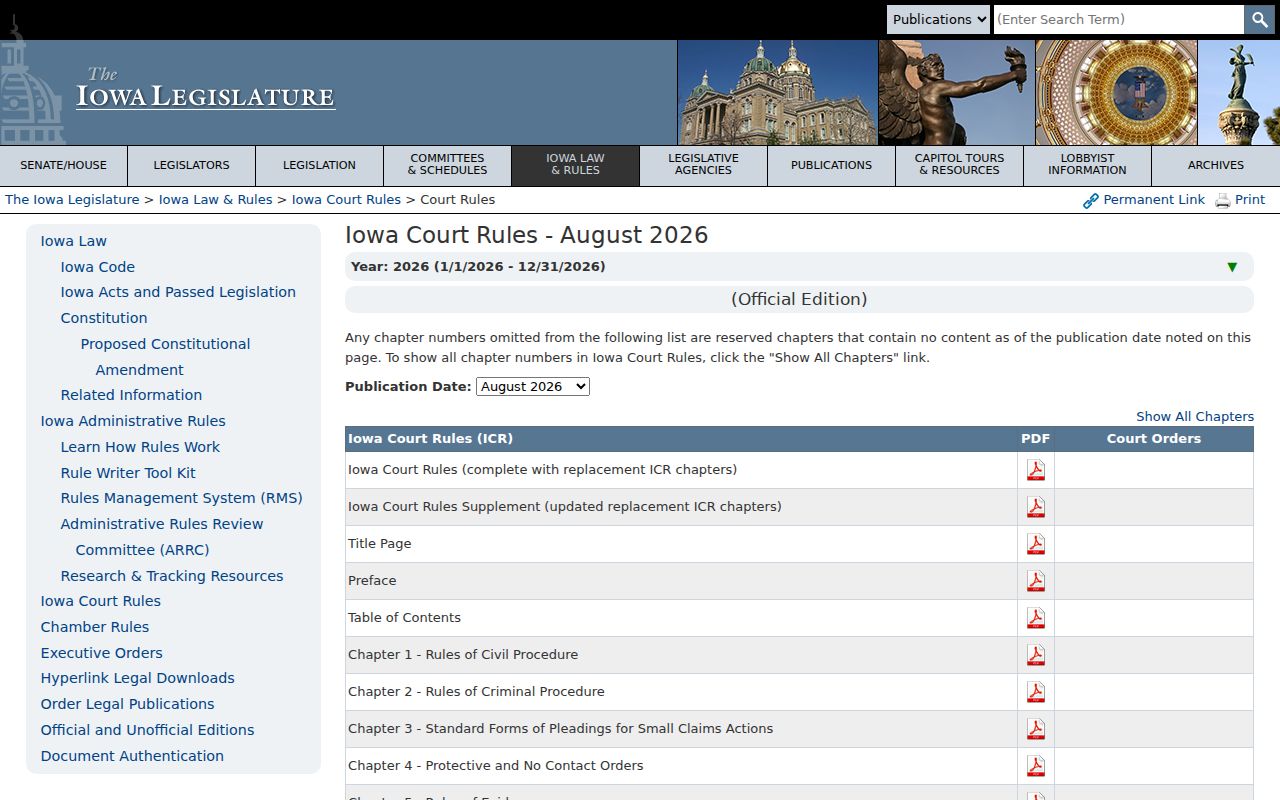
A cached blank warrant form ages fast in Clay County, so pull forms from the current rules page instead.
Inside a Clay County Arrest Warrant
What the public record shows may be only part of the warrant schema. Iowa Chapter 804, the official warrant form route, and Iowa Courts Online identify the fields that tend to matter. A blank illustration like CASE ID / ARREST WARRANT shows how to read the file while protecting private information in Clay County.
| Court and county | Iowa District Court, Judicial District 3, with Clay as venue. |
|---|---|
| Case ID and type | The official court identifier and docket class. |
| Person description | The name or lawful description used in the warrant, not reproduced here. |
| Charge and count | The alleged offense and separate count, not a conviction. |
| Issue authority and date | The judicial officer's authorization and issue event. |
| Bail order | A case-specific release condition or amount if endorsed. |
| Return or service | An officer event showing execution or return when public. |
| Current status | Active, recalled, served, quashed, or another confirmed label. |
Clay County publishes no public arrest-warrant roster and no local warrant-number format to check against.
Clay County Arrest Record Matching
A name match is not identity confirmation. Iowa Courts Online can be searched by name, exact case ID, citation, or a documented DOB mode, so use a case ID when you have one. Otherwise narrow by Clay County and the likely case type. Keep sensitive details between you and the official custodian. And remember that a visible docket entry is not live warrant validation: a case can stay open after a warrant is recalled, a service event may post later, and a sealed record may not appear at all. When a result looks relevant, call the Clay County Clerk at 712-262-4335 and ask what the current public record shows. For enforcement or custody procedure, the Sheriff is at 712-262-3221 and the Jail at 712-264-4242.
Record rule: Confirm both identity and status before relying on an arrest-warrant result.
Use “no public result located” for a blank search, not “no warrant exists.”
Serving Arrest Warrants in Clay County
Iowa Chapter 804 covers execution by peace officers, arrest timing, communications, initial appearance, and returns. The exact circumstances of service live in the officer's and agency's own records. No page can promise where, when, or how a Clay County arrest warrant will be executed, and one may be enforceable well beyond the county even though the case was filed there. The Clay County Jail describes its role as safe and secure confinement of people received by court order or as otherwise allowed by law. The county's own pages publish no surrender-window hours, bond-payment methods, booking cutoffs, or release timeline. Call before you arrive if you plan to address your own warrant. A lawyer can coordinate with the court and the agency and explain how voluntary appearance differs from an unexpected arrest.
Note: A deputy executes a court warrant, but only the court can recall or quash its own judicial order.
Clay County Arrest Warrant Initial Appearance
Iowa Code section 804.21 supplies the general initial-appearance and release framework, but it sets no preset Clay County bond amount for all arrest warrants. A warrant may carry an endorsed bail order, or the court may take up release at the proper proceeding. The current order controls, not a generic chart. Ask which court event comes next, whether counsel should appear, and whether a judge or magistrate must act. The Iowa criminal-case information route tells people who can't afford a lawyer to get the court-appointed-attorney application through the Clerk. A judge decides eligibility and any repayment terms. No page can promise an appointment, release, a bond type, or a hearing's outcome. Keep the court notice and any payment or filing receipt, and ask the Clay County court for docket confirmation of the next appearance or recall when one is available.
Comparing Arrest, Summons, and Bench Warrants
Arrest warrants, summonses, and bench warrants all point toward a court date, but each carries a different legal weight. In Clay County, go by the exact label on your record or notice.
| Process | How It Starts | Immediate Meaning |
|---|---|---|
| Arrest warrant | Complaint and judicial probable-cause decision | Commands peace officers to arrest the described person. |
| Summons | Court-issued command to appear | Requires appearance without the same custodial command. |
| Bench or FTA warrant | Missed appearance or court noncompliance | A court-issued arrest process tied to the failed obligation. |
| Citation | Issued in lieu of arrest when authorized | A written promise to appear; later nonappearance may lead to a warrant. |
Iowa section 805.5 says "arrest warrant" for a willful failure-to-appear offense. "Bench warrant" is just everyday courtroom talk. "Capias pro fine" is a term from other states, not a Clay County or Iowa label.
Clay County Arrest Warrant Status
A status moves; it is not one permanent label. "Issued" means a judge authorized the warrant. "Active" means Clay County still treats the warrant as enforceable after confirmation, while "served" or "returned" marks officer action. "Recalled" or "quashed" is the court ending or limiting enforcement.
- Issue date
- The day the court authorized or entered the warrant.
- Return
- The officer's report back to the issuing court.
- Recall
- A court action withdrawing the warrant from enforcement.
- Quash
- A judicial action setting aside or limiting the warrant.
- Disposition
- The later court result, which is distinct from arrest.
Ask when the Clay County arrest warrant status was last confirmed. Courts and agencies refresh their systems on different schedules.
Clay County Arrest Warrant Scam Check
An arrest threat pressures people into fake payments. In June 2026 the Iowa Judicial Branch warned that courts never demand money by text or phone. No real court asks for Social Security numbers, prepaid cards, a special callback number, or a link click either. Stop the moment a message leans on those tactics. Look the office up on an official government page, then call the Clay County Clerk or Sheriff at the published number rather than the one in the message. Never hand a caller remote access to your device. A genuine docket question goes through Iowa Courts Online and the Clerk. For a custody question, turn to Sheriff or Jail staff. The official Iowa court scam warning spells out each of these tactics in plain terms.

Independent verification protects both the person and the integrity of the warrant inquiry.
If There's an Arrest Warrant for You
Start by confirming the case, the identity, the issuing court, and the current status. Search Iowa Courts Online for the public docket, then call the Clay County Clerk. Ask whether the record shows an active warrant, a recall, service, a next appearance, or a bail order, and ask where any filing or proof of payment must go. Get legal advice before appearing in person. Counsel can help with voluntary surrender, a request to recall or quash, the initial appearance, and bond. If payment is authorized, use the official Iowa court route and keep the receipt. Paying the debt does not by itself prove a separate warrant was recalled. For custody procedure, call Sheriff or Jail staff, since no universal Clay County surrender schedule is published.
Act carefully: Do not approach another person or attempt enforcement. For your own warrant, confirm the court and obtain legal advice before appearing.
See the broader Clay County warrant resolution steps for how the Clerk, court, counsel, and Sheriff fit together.
Clay County Arrest Warrant Docket Limits
Even a public arrest-warrant docket has protected edges. Juvenile records may stay confidential. A Clay County complaint can be visible while its attachment stays sealed. Victim information, addresses, probable-cause material, and certain investigative content may be withheld or redacted under statutes and court rules. The Iowa Courts privacy policy explains that the online service displays public parts of official court records while confidential material remains governed by law. Corrections or confidentiality requests must go through the court process. A broad public-record request is no substitute for criminal discovery or agency validation. The privacy policy page spells out what stays public and what stays sealed.

A public Clay County case number does not make every document open or every status current.