
Clay County Municipal Court Warrants
The phrase "municipal court warrant" fits plenty of states, yet it does not fit Iowa's court structure at all. Iowa folded its old municipal, justice, and county courts into a single unified trial court years ago. In Clay County, that court is the Iowa District Court sitting in Judicial District 3. Magistrates and district associates handle assigned District Court work: many simple misdemeanors, traffic matters, preliminary hearings, and county or municipal infractions. None of them sits on a separate Spencer, Everly, Royal, Peterson, or Fostoria municipal court, because no such court exists. A city officer may issue a citation for conduct inside the city, and a municipal infraction may show up as a case type. Neither fact builds a city court or a city-run warrant docket. Miss a required appearance, though, and Iowa law can turn that miss into a failure-to-appear arrest warrant inside the District Court case. Clay County sources use the terms arrest warrant, bench warrant, and FTA arrest warrant. "Capias pro fine" does not appear as local terminology here.
One Clay Clerk Holds the Court Record
The Clay County Clerk of Court, part of the Iowa Judicial Branch, keeps the District Court docket for every case in the county. The official court page lists the clerk at 215 West 4th Street in Spencer and gives 712-262-4335 as the phone number. Call that office first with questions about a case type, a scheduled appearance, court debt, a warrant entry, or a recall in the judicial record. The official Clay County court page identifies Judicial District 3, the clerk contact, and the state payment route.
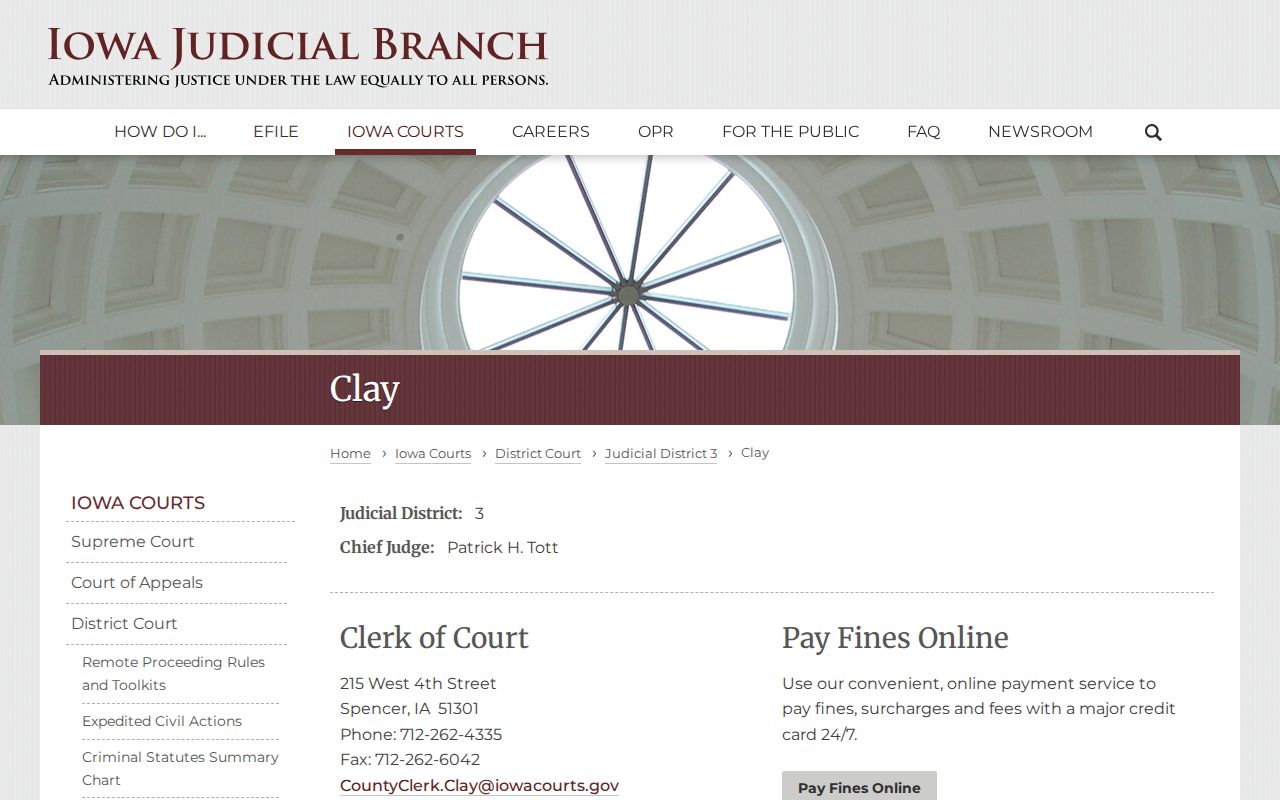
The state clerk, not a separate city-court clerk, is the public route to Clay County court records for municipal and traffic matters.
Clay County Cities With Municipal Courts
No Clay County city has its own municipal court under Iowa's unified system. City governments and police departments still matter, but their roles deserve honest labels. A police department can issue a citation or enforce a court warrant. A city office may collect a local parking ticket. The Iowa District Court and the Clay County Clerk keep the docket for traffic, criminal, and municipal-infraction cases.
| City | Separate Municipal Court | Correct Court Route | Public Contact |
|---|---|---|---|
| Spencer | No | Clay County Iowa District Court | Clerk 712-262-4335 |
| Everly | No | Clay County Iowa District Court | Clerk 712-262-4335 |
| Royal | No | Clay County Iowa District Court | Clerk 712-262-4335 |
| Peterson | No | Clay County Iowa District Court | Clerk 712-262-4335 |
| Fostoria | No | Clay County Iowa District Court | Clerk 712-262-4335 |
The five cities listed here are the county's largest incorporated places, not separate courts with separate warrant systems. Every smaller Clay County community uses the same county-seat court route through Spencer.
Municipal Infraction Is a Case Type
"Municipal" can describe the ordinance involved without describing the court, and that distinction matters when you read Iowa Courts Online. A municipal infraction, a traffic case, a simple misdemeanor, a citation, a summons, and an arrest warrant are different labels at different stages. A citation is a notice and a promise to appear. A summons commands an appearance. A warrant authorizes an arrest or another specific court action. Keep the exact docket label rather than converting every court command into a "municipal warrant." Iowa Code section 805.5 makes willful failure to make a required appearance a simple misdemeanor and directs the court to issue an arrest warrant for the FTA offense. So a city-issued citation in Clay County can end up tied to an Iowa District Court warrant, though the path never runs through a city municipal court. Ask the clerk for the case type, the event date, and the exact warrant label, and the confusion fades.
Plain fact: A municipal-infraction label identifies the subject of a case; it does not prove that Clay County has a municipal court.
Checking a Municipal Court Warrant
With no city-court portal or city clerk anywhere in Clay County, every documented channel leads back to the unified state court and county enforcement offices. The county publishes no public active-warrant list. Iowa's IOWA System holds warrant information for authorized criminal-justice agencies only, and it is not open to public self-search.
- Search Iowa Courts Online using the exact case ID or citation number when available, or use the legal name and Clay County filter.
- Use the official ePayment search for a court debt, while remembering that a balance does not certify whether a warrant is active or recalled.
- Call the Clay County Clerk at 712-262-4335 and ask whether the docket shows an FTA, warrant, recall, required appearance, or payment-only obligation.
- For present enforcement or custody logistics, call the Clay County Sheriff at 712-262-3221 or the jail at 712-264-4242 before appearing.
A Judicial Branch public-record request can reach public, nonconfidential court material and may be routed to the online docket, eFile, or a courthouse terminal. Send any agency-held record or policy request to the Sheriff. The County Attorney prosecutes cases and is not the neutral holder of every court record.
Spencer Police Does Not Supply a Roster
Spencer is the county seat and the largest city, so residents who get a city citation often start with its police department. That instinct is understandable. The official Spencer Police Department page offers a business contact and describes the agency, but it posts no public warrant-search tool. A call there can route a current law-enforcement question to the right person. It cannot replace the state court docket or the Clay County Clerk, which is where the record actually sits.
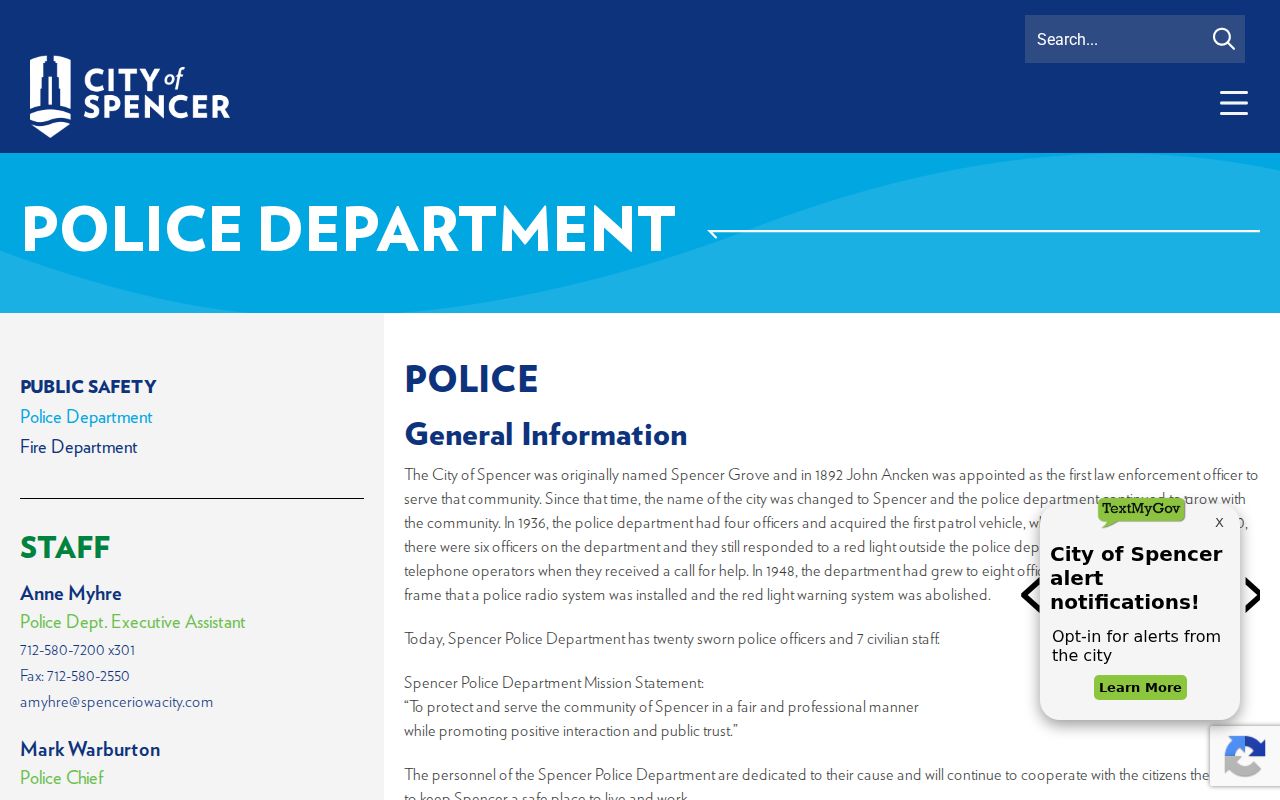
Spencer Police serves as a local enforcement contact, while Clay County court records stay inside Iowa's unified judicial system.
Inside a Municipal Court Warrant
A Clay County search can land you on a District Court case record instead of a page marked "municipal warrant." Fields vary by record. Some filings stay sealed or confidential even when the docket itself is public. Read the exact source, note the case identifier, and use it when you ask for confirmation.
| Case ID | Iowa Courts Online identifier used to distinguish the record. |
|---|---|
| Case Type | Traffic, simple misdemeanor, municipal infraction, or another actual court category. |
| County | Clay filing or venue filter. |
| Citation or Charge | Alleged ordinance or statutory violation, not a conviction by itself. |
| Event and Issue Dates | Citation, court setting, FTA, warrant entry, service, or recall dates shown. |
| Warrant Type | Arrest, bench, or FTA arrest warrant when the custodian supplies that label. |
| Status | Active, recalled, served, quashed, or another precise docket or agency term. |
| Financial Entry | Assessment, payment, plan, or collection item that may be distinct from warrant status. |
A warrant in Clay County can carry two dates that do not match. The issue date comes first, and the entry may reach law enforcement later. If a payment shows up before a recall does, ask the clerk to explain the gap instead of trusting one stale record.
Clay County No-Result Myth
A blank result on a city website proves very little, because Clay County cities do not run separate municipal-court databases. A blank sheriff search proves little either; the sheriff posts no county warrant roster. Even Iowa Courts Online shows only the public portions of a docket. Restricted matters hide. Recent filings take time to appear. Spelling differences and lag between court and agency systems can change what a search returns. So the honest answer is "no public result through this search," not "no warrant." Follow that answer with a call to the clerk, and to the sheriff when it fits. The same caution runs the other way. An older court entry does not guarantee an active warrant in Clay County. It may have been served, recalled, or quashed, and only the responsible court or agency can confirm the current status.
How to Resolve a Municipal Court Warrant
In Clay County, a warrant ends with the court that issued it, the Iowa District Court rather than a city tribunal. Confirm the case and its exact status first. Then ask whether the next step is payment, a reset appearance, a hearing before a judge or magistrate, or another order. The Sheriff cannot recall a judicial warrant. A payment does not automatically close a failure-to-appear event, so let the issuing court, not guesswork, guide the fix.
- Gather the legal name used in the case, case ID, citation number, notice, and approximate court date.
- Ask the clerk whether the docket shows a warrant, required appearance, recall, or payment-only obligation.
- If custody is possible, consult counsel and call the Sheriff or Jail for current arrival logistics.
- Use only an authorized payment or court channel and retain the confirmation.
- Confirm in writing or on the docket that the required appearance, payment, or recall has posted.
Clay County publishes no walk-in warrant hours, local recall form, preset bond amounts, bond-payment methods, or amnesty event. If you cannot afford a lawyer, ask the clerk for the court-appointed-counsel application; a judge decides eligibility.
Warning: Do not appear at a city office expecting it to recall an Iowa District Court warrant; confirm the court process first.
Clay Municipal Records and Privacy
Iowa Code Chapter 22 opens public records to you, subject to statutory exceptions, and separate court rules govern judicial records. Expect withholdings or redactions for juvenile matters, sealed files, victim information, addresses, and confidential attachments. A public case number does not make every filing public. When you request records in Clay County, name the case, the date range, the record type, and your preferred format, then ask for the public and segregable portions. The Judicial Branch records policy explains that costs may include copying, postage, retrieval, review, and redaction.
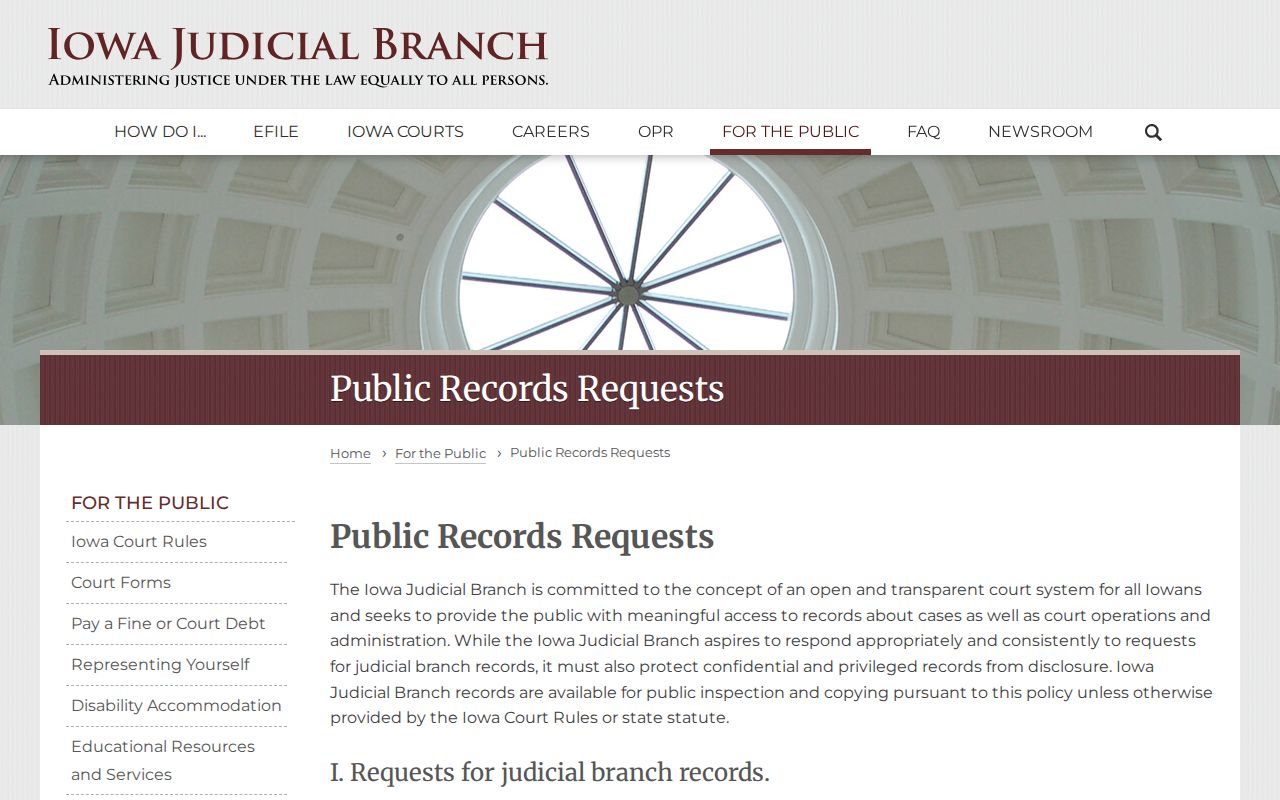
That policy is why a focused request to the court in Clay County beats asking a city for a municipal warrant roster it does not keep.