
Searching for a Clay County Warrant
Start your search with Iowa Courts Online, which displays the public portions of Iowa District Court dockets. Treat it as a court-record tool, not a live warrant system. Clay County runs no separate municipal, justice, or county criminal court, so the Clerk of Court keeps the local District Court record while the Sheriff and Jail field law-enforcement and custody calls. Use this order for your own matter or a family member's authorized inquiry.
- Search by an exact case ID or citation when one is known.
- For a name search, select Clay County and the likely case type.
- Use EPayment only to identify a citation or court debt, not to certify warrant status.
- Call the Clerk at 712-262-4335 for docket, court date, and warrant-event questions.
- Call the Sheriff at 712-262-3221 or Jail at 712-264-4242 before a custody-related visit.
Clay County Has No Public Roster
Clay County keeps no one-click warrant roster. The Clay County Sheriff website offers no public name-search box, warrant PDF, or active-warrant table on any of its pages. That absence is not proof that no warrants exist here. It simply means the county has chosen not to publish a public list, so an outstanding warrant can still be active without ever showing up online. A stale copied list will not fill that gap either. A court docket can locate a case and track its events. Whether a warrant is active, recalled, served, or simply not yet visible in any record is something only the responsible office can confirm. Call the sheriff or the issuing court directly. The official Jail page lays out the custody channel itself, without opening any private record to the public.
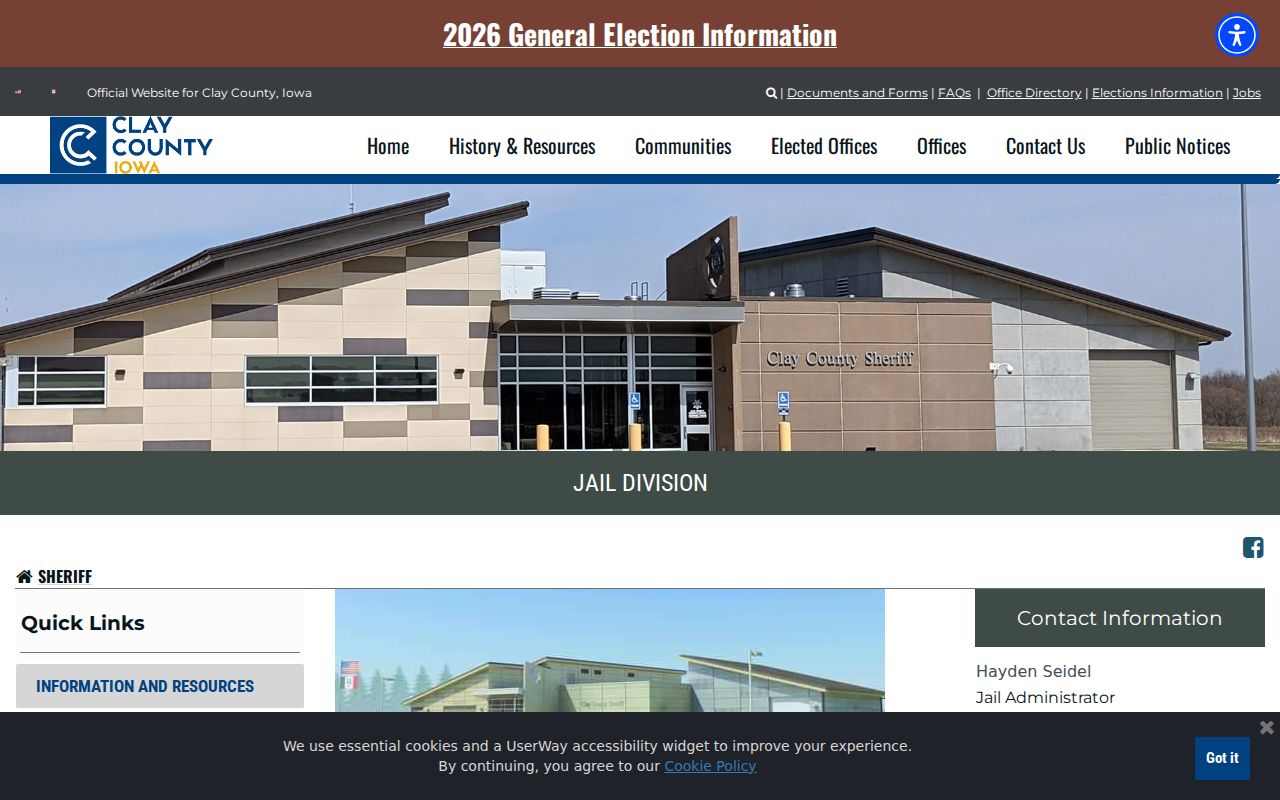
The safest Clay County warrant lookup pairs court research with a direct status call.
Warrant Search Fields Explained
Iowa Courts Online supports several search routes, and exact identifiers cut down false matches. Official help notes that a case ID runs 17 characters, with uppercase letters where applicable. A citation ties to a court matter, but it is not automatically a warrant number.
| Field Label | Type | Required | Notes |
|---|---|---|---|
| Last or firm name | Text | Name mode | At least two letters; enter it as filed. |
| First and middle name | Text | Mode dependent | Middle name may be optional; initials omit a period. |
| County and case type | Menus | Case-ID mode | Choose Clay and the relevant docket class. |
| Date of birth | Date | DOB mode | Use only for proper identity confirmation. |
| Case ID or citation | Text | One identifier | Most precise when the full value is known. |
Keep any Clay County warrant search narrow. A percent-sign wildcard can widen some documented name fields, though it may flood you with ambiguous matches.
Clay County Name Matches Need Care
A name match in a Clay County docket is a lead, not proof of identity. Spelling, a middle name, county, and case type can each change what comes back. The DOB search mode demands an exact birth date plus first and last names, and that sensitive detail belongs only in the official system or a direct exchange with the office that holds the record. Treat a blank result with the same care. It can stem from a wrong spelling or case type, a citation that has not posted yet, or a record that is sealed, juvenile, or restricted. The honest reading is "no public result through this search," never "no warrant." A precise call to the Clerk is the next step, and the official civil-process page helps you tell served civil papers apart from criminal arrest warrants.
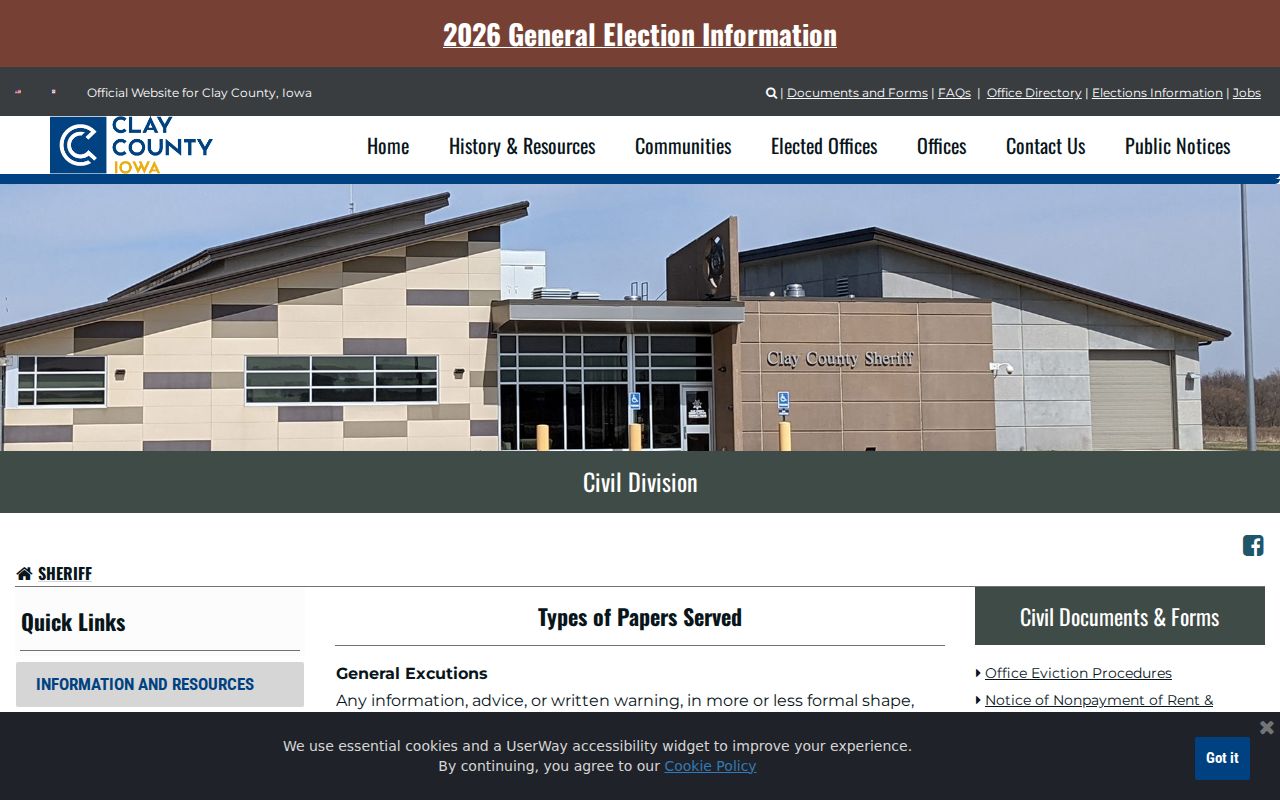
Its process list shows why you must read the exact document label before drawing any warrant conclusion in Clay County.
What a Warrant Search Shows
A public Clay County docket can surface case and event data. Read each label as a court-record field, not a promise of current enforcement. Iowa Courts Online publishes no universal Clay warrant-number format. A blank schema like CASE ID / WARRANT EVENT is the safe illustration, never a copied private record.
| Case ID | The official identifier used to open the court docket. |
|---|---|
| Case type and county | The docket class and Clay filing venue. |
| Charge or count | An alleged offense and count, not a conviction. |
| Warrant event | An issue, recall, service, return, or other entry if public. |
| Bail or bond | A case-specific order or posting event when displayed. |
| Status or disposition | The recorded state, which still needs current confirmation. |
“Issued,” “served,” and “recalled” describe distinct events. One should not be inferred from another.
Clay County Payment Search Limits
The official Iowa EPayment search locates financial items by name, case ID, or citation. Its by-name mode takes case type, county, first and last name, or part of a citation, while the case route wants the full identifier. That is enough to find the right Clay County file. What EPayment cannot do is certify that a separate failure-to-appear arrest warrant was recalled. Official pages warn that some citations take 10 to 14 days, or even 14 to 21 days, to appear, so call payment support at 515-348-4788 or the Clay County Clerk about a recent missing item. Paying may settle the debt while an appearance or warrant event still needs court action. The Clay County Crime Stoppers page marks one more limit: its tip and reward channel is no warrant lookup.
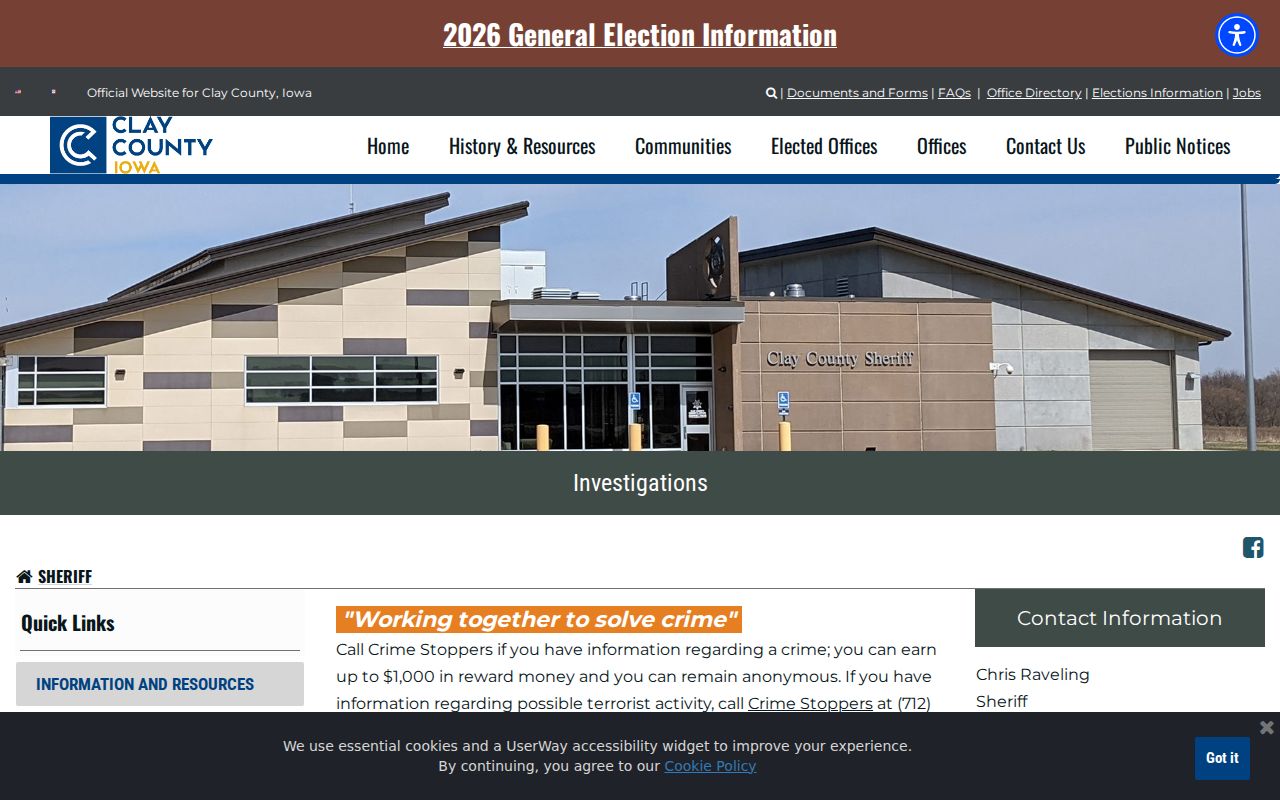
Use EPayment to identify a Clay County financial file, not Crime Stoppers to ask whether a warrant exists.
Where to Check Clay County Warrants
The Clay County Clerk is the court-record contact, since judges and magistrates issue judicial process while the Sheriff and other peace officers execute arrest warrants and run custody. City police in Spencer, Everly, Royal, Peterson, or Fostoria can issue citations or make arrests, but Iowa's unified trial court means no separate municipal warrant database exists for any of them. The official important-numbers page gathers Clerk, Sheriff, and Jail routes in one spot. Call the Clerk about a docket entry, date, payment, or procedure. Call Sheriff or Jail staff about surrender, booking, and custody. Clay County publishes no surrender hours, bond window, payment methods, or release schedule, so phone ahead before you travel.
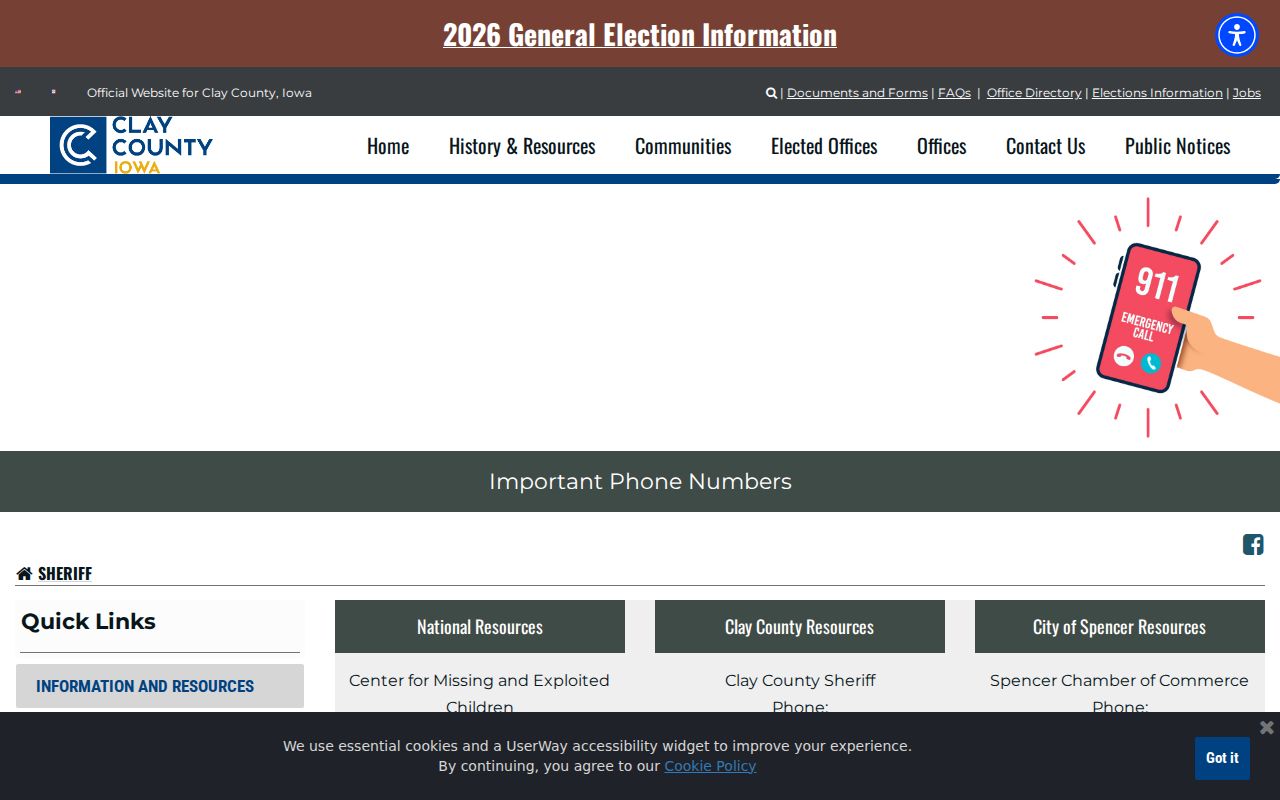
Separating court questions from custody questions gets each issue to the right office.
Clay County Status Terms
A small difference in one docket word can change your next call. Ask staff to explain the exact term in the current record instead of translating every event into "active." Iowa sources use arrest warrant, bench warrant, and failure-to-appear arrest warrant. Clay County does not use "capias pro fine" as terminology.
- Issued
- The court authorized a warrant; this is not service.
- Served or returned
- An officer execution or return event was recorded.
- Recalled or quashed
- The court ended or limited enforcement, subject to system updates.
- FTA
- Failure to appear at a required court event.
- Bond
- A release condition or amount specific to the case.
The court docket and the agency database may update on different schedules in Clay County. Ask which office confirmed a status, and when.
Clay County Records Request Route
A public search does not always answer a narrow question. When it falls short, the Iowa Judicial Branch records policy sets the route for Clay County court requests. It points requesters to Iowa Courts Online, eFile, a courthouse terminal, or the proper office. Name the record, the date range, case type, and format. Ask for public portions. Request a cost estimate before staff-heavy retrieval or redaction begins. The Clay County Sheriff posts no warrant-request form and no fee schedule. A request for a procedure, a policy, or a public form works better than a demand for “all warrants.” Court records go to the Clerk or the Judicial Branch. Agency policy belongs to the Sheriff, while a federal docket stays with the federal court and PACER.
Restricted Warrants and Access Rules
Iowa's open-records law opens the door, but not all the way. Iowa Code Chapter 22 gives the public a right to examine government records, and Clay County offices apply it when someone requests warrant files. Some material stays closed, though. Juvenile records can be confidential under Chapter 232, and courts may withhold or redact probable-cause documents, victim details, addresses, sealed filings, and parts of search-warrant material. The official Iowa Code Chapter 22 index lays out the access and confidentiality rules a focused request runs into.
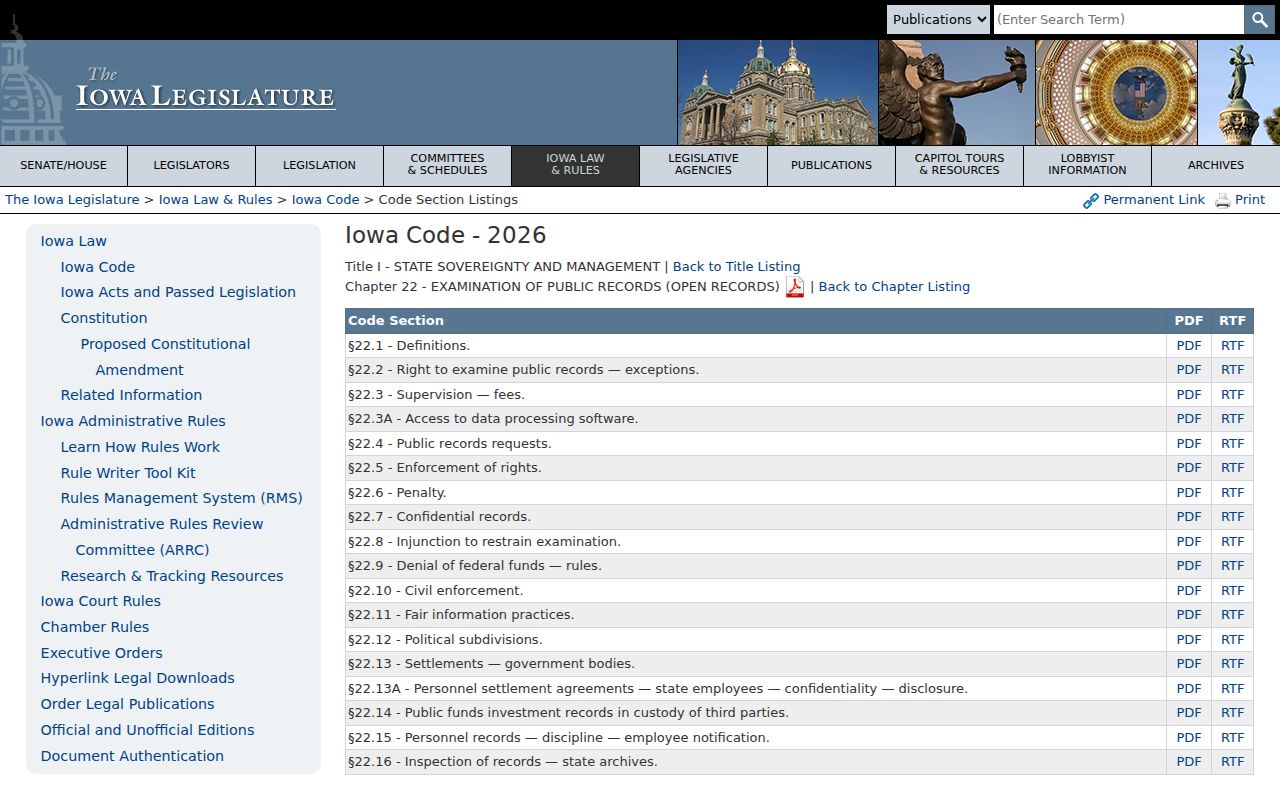
The line is not simple. Clay County requesters must weigh a general right to inspect public records against the exceptions that can restrict a warrant document.
Key access rules:
“No public result located” is right when a Clay County warrant lookup is blank.
A public case number does not make each attached document public.
Ask for the legal basis and any separable public part when material is withheld.
Docket access does not erase confidentiality. The Iowa Courts privacy policy says as much and routes Clay County correction or privacy questions through the court process.
Clay County Statewide Search Boundary
The IOWA System links authorized justice agencies across the state. Its files include wanted persons, protective orders, stolen property, and other data. The public gets no name-search form. No registration route exists either. A resident cannot run an IOWA System query after an Iowa Courts Online search. Public users must rely on the court docket and direct Clay County confirmation. Federal cases sit apart. PACER may show public federal docket entries, though sealed warrants may not appear. The U.S. Marshals Warrant Information System stays internal. That is why a public Clay County warrant search ends with an official Clerk or Sheriff contact.