
Clay County's Most Wanted Program
Clay County has no public warrant roster to browse. The sheriff posts no name search, no downloadable warrant table, and no dated most-wanted list with a count of who is on it. What the sheriff's investigations page does offer is Clay County Crime Stoppers, a local channel where citizens, law enforcement, and media work together. Tips flow to investigators, and a reward may follow when the program's stated conditions are met.
So treat any Clay County most-wanted roundup you see elsewhere with care. A stale image, a third-party compilation, or a social post is not proof of an active warrant today. Status changes fast. A warrant can be served, recalled, or quashed by court action at any time, so the listing you found may already be old news. Check with the source that holds the record before drawing conclusions.
Clay Crime Stoppers Is a Tip Channel
The official Sheriff investigations page spells out how the tip line works. Callers with crime information may stay anonymous. You get a code number instead of giving your name. The local board sets rewards and payments, and its description allows a reward of up to $1,000 for information leading to the arrest and indictment of a serious offender.
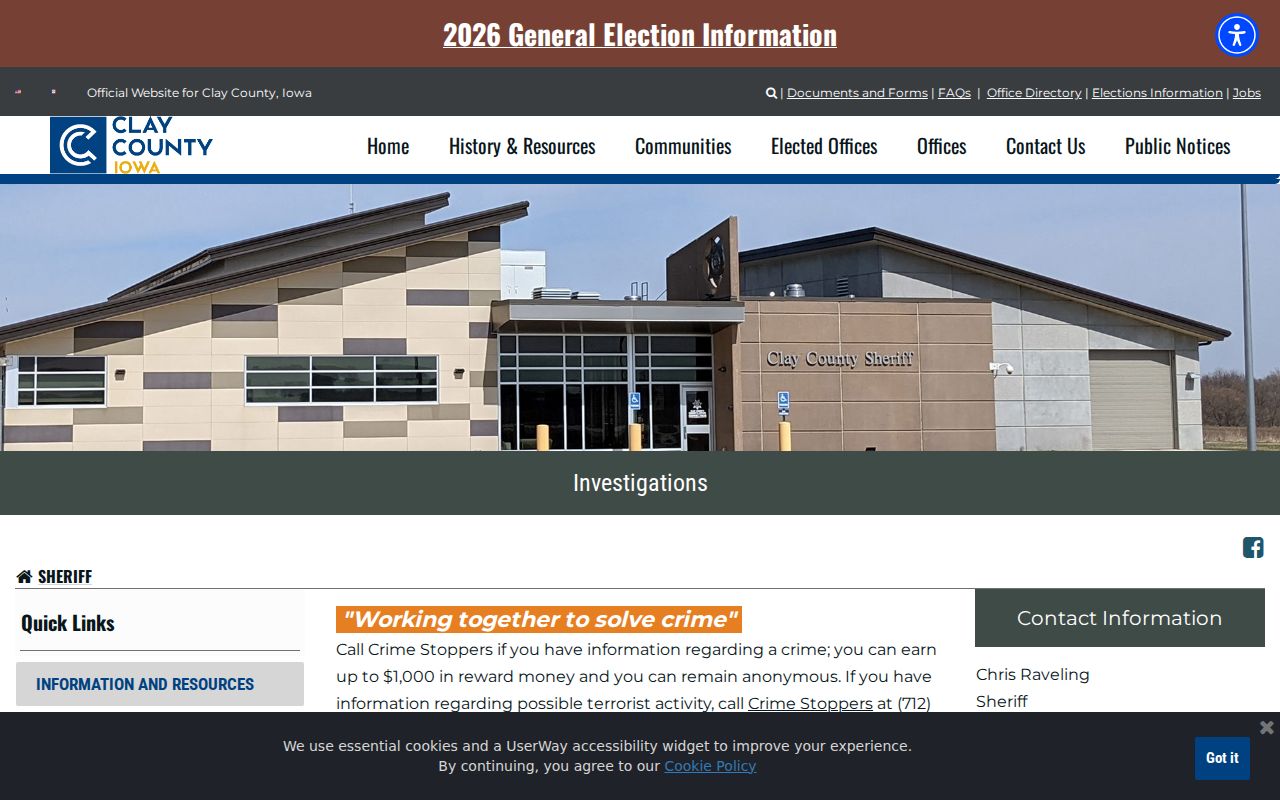
What Clay County publishes there is a reporting process, not a warrant list and not a way to check on a relative. The Crime Stoppers number is 712-262-6655, and it belongs to crime information within the purpose the Sheriff states. It is the wrong door for personal case status. Asking a tip program about a warrant sends your question to people who cannot answer it. For your own status, use Iowa Courts Online and call the Clay County Clerk of Court at 712-262-4335. The clerk's office is tied to the issuing court. That is where a real answer about a warrant comes from, not a tip line.
How the Most Wanted Lists Work
A real most-wanted list is selective by design. An agency picks a small group for a public-safety or investigative reason and puts those names forward. An active-warrant list, where one exists, runs broader because it covers warrants rather than publicity choices. A court docket is broader still in its own way, since it records public case events but may not show current enforcement information. Each source answers a different question. Clay County publishes none of the pieces that would make a roster: no selection rules, no review schedule, no update cadence, and no complete list. So treat a Clay County most-wanted search with care. Reading a Crime Stoppers page as a list of chosen people would be a mistake. So would turning court search results into one. A missing name does not prove no warrant exists, and an old entry does not prove current status. When an agency does publish a list, read its date and its safety language on the original page. Go back to the source instead of saving a profile for later. An official page gets corrected or removed when facts change. A copy stays frozen and can cause real harm.
What Clay County Publishes and Omits
The Sheriff's public navigation covers the office home, staff, investigations, civil division, jail division, important phone numbers, and history. No warrant search appears in any of it. Clay County publishes no most-wanted download either. That gap matters. An honest public guide says plainly that no roster exists rather than padding the space with names collected from somewhere else.
| Crime Stoppers Page | Explains anonymous tips, code numbers, and a possible reward. |
|---|---|
| Public County Roster | None located as of the research inspection date. |
| Public Warrant Count | No official date-stamped Clay County count located. |
| Personal Status Route | Iowa Courts Online, then confirmation from the Clerk or Sheriff. |
| Agency-Only System | The IOWA System is restricted to authorized justice agencies. |
| Federal Route | Northern District federal sources are separate from Clay County and Iowa court records. |
Clay County can add, revise, or remove any of this at any time. Check the linked source again before relying on what a page said yesterday.
Reporting a Tip Safely
A tip should report what you saw, never start a confrontation. Use the official Clay County number or agency page and follow the operator's instructions. Do not approach, detain, or threaten anyone. Do not announce that a person may be wanted. Keep your tipster code number and contact details private too. An emergency belongs with 911, not an online records request.
- Confirm that the phone number or link comes from the official Clay County Sheriff page.
- Write down what was observed, when and where it occurred, and distinguish facts from assumptions.
- Use Crime Stoppers only for crime information, not for a personal warrant-status question.
- Keep any assigned anonymous code private and follow the program’s instructions about later contact.
Safety: Send information through the official channel and do not approach or attempt to detain anyone described by an agency.
A reward is never automatic. The Clay County description ties payment to information leading to the arrest and indictment of a serious offender, and the board decides each reward. Never promise one, and never share a tip identity.
Clay Tip Program Myth and Fact
Myth: Crime Stoppers can check whether a named person has a warrant. Fact: Clay County describes it as an anonymous channel for crime information. The Clay County Clerk maintains the court record, and the Sheriff can address agency-held or custody information. A tip operator is not a substitute for either custodian.
Myth: Everyone with an active warrant shows up on a most-wanted list. Fact: These publications are selective, and Clay County posts no official roster. Restricted matters, newly issued warrants, and agency-only information may never appear publicly.
Myth: A copied profile remains reliable. Fact: Warrant and case status can change, while copied material remains frozen. Use the original official source, check its date, and follow its current safety language. This is why no names, photos, mugshots, or profile details are republished here.
Most Wanted Lists vs Active Warrants
A most-wanted entry and an active warrant are different things. Clay County agencies occasionally post a fugitive profile pulled from a live warrant. A court docket can hold a warrant event without ever feeding a public list. Federal profiles, in turn, cover only a chosen few federal warrants, never all of them.
| Source | Purpose | What Absence Means |
|---|---|---|
| Most-wanted list | Selective public assistance with specified investigations | Not proof that no warrant exists. |
| Active-warrant roster | Agency list where a sheriff chooses to publish one | Not proof of no warrant, especially when no Clay roster exists. |
| Iowa court docket | Public portions of case history and court events | No public result is not a live agency clearance. |
| Crime Stoppers | Receives crime information and supports anonymous tips | Not a warrant-check result. |
For more on the gap between a published roster and court status, the Clay County outstanding warrants page explains the county's no-list fallback. Direct confirmation with the court is still the final step.
Clay County and the Federal Boundary
Clay County sits inside the U.S. Marshals Service Northern District of Iowa. That district may publish selected "Profiled Fugitives" and offers an official tip route. Those federal profiles stand apart from Iowa District Court and the Clay County Sheriff, and they show only a fraction of federal warrants. The Northern District of Iowa court website lists federal court locations and official scam guidance.
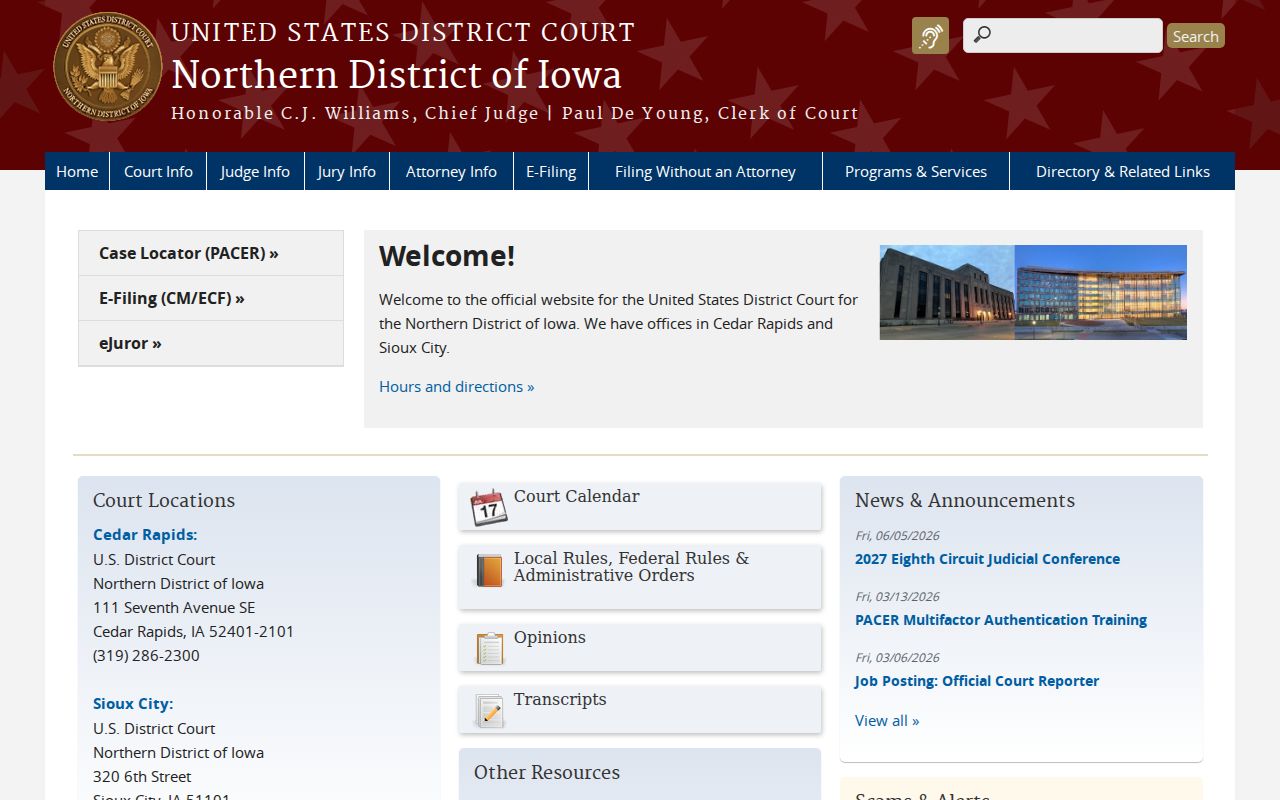
That page shows the separate federal court layer, with public locations in Cedar Rapids and Sioux City rather than Spencer. For current district and tip information, the U.S. Marshals Northern District page is the right source. Never approach someone a federal agency displays. Follow the agency's current safety directions, and leave any Clay County questions to the local offices.
Federal Dockets Are Not Fugitive Lists
PACER lets registered users pull public federal case dockets plus a nationwide Case Locator. You can search one federal court or the whole index. A docket may show the case number, court, parties or counsel, entries, documents, and public status. It cannot certify whether a federal warrant is live, though, and sealed warrants or complaints may not appear at all. The official PACER site explains docket access and account requirements.
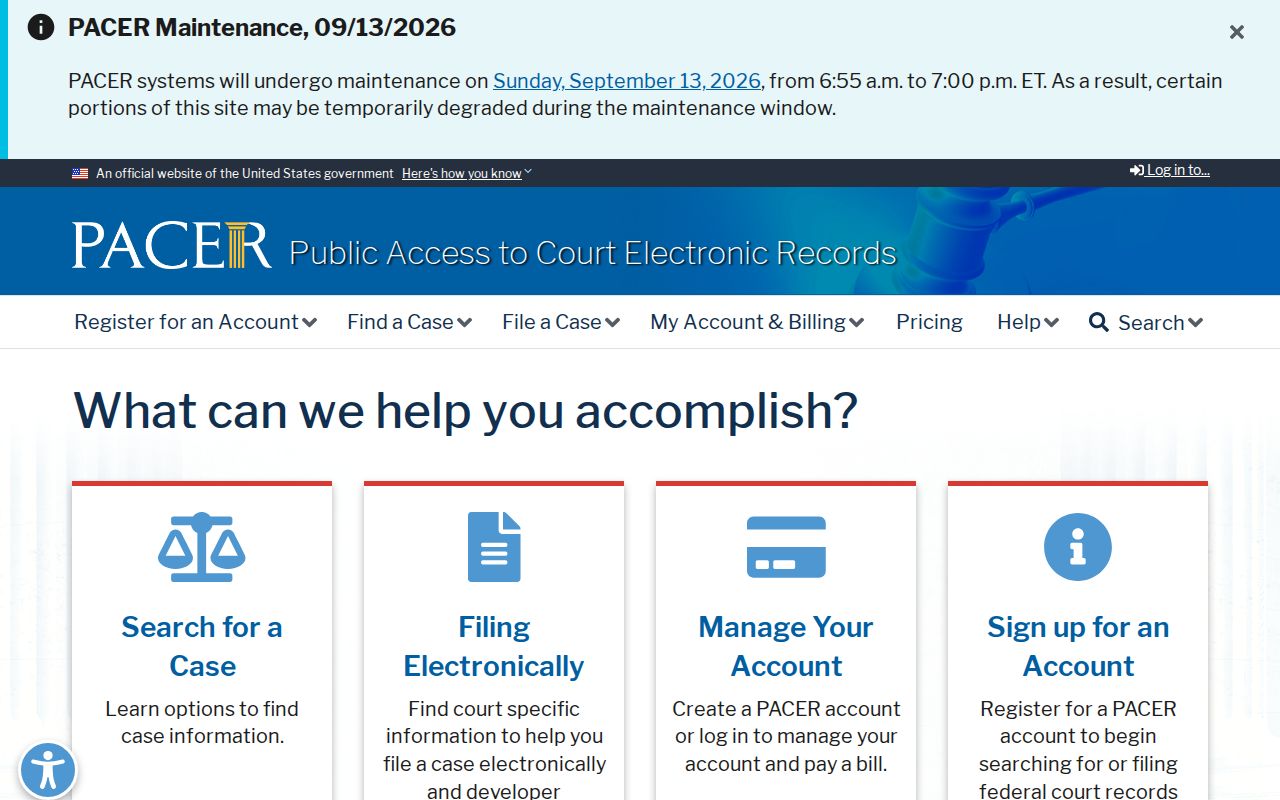
Public federal dockets help with case research but cannot rule out a sealed warrant, even for a Clay County resident named in a filing. The U.S. Marshals Warrant Information System is different. That internal investigative tool holds federal warrant and court information for authorized uses only. No public self-check exists there. Anyone with a real federal case concern should contact the federal court or a lawyer instead of hunting for access to an internal system.
If You Think You Are on a List
Crime Stoppers is for tips, not for telling you whether you are wanted, and walking up to law enforcement without knowing the case is risky. Go to the court that would hold the record first. For an Iowa matter, search Iowa Courts Online, note the case ID, and call the Clay County Clerk at 712-262-4335. Ask whether the public docket shows an active warrant, an FTA, a recall, a scheduled appearance, or a payment-only obligation. Talk to an attorney before your next move if you can. When custody may be involved, the Clay County Sheriff at 712-262-3221 or the Jail at 712-264-4242 can explain current arrival logistics, though no public source guarantees a safe-surrender schedule, a preset bond amount, or release. Only the issuing court can recall or quash its warrant.
Act carefully: Contact counsel and the responsible court or warrant agency; never arrange a confrontation or rely on an undated copied list.
Clay County Source-Checking Rules
Before trusting any official list, check the agency name, page date, warrant type, update statement, and safety instructions. A genuine public record can still be incomplete. An attached document may be sealed even when the case number is visible. Iowa juvenile records and protected personal information carry extra limits, and responsible public access never requires republishing private details. A focused records request should name the custodian, date range, desired record, and format. Send docket material to the Clerk or Judicial Branch, agency policy or agency-held warrant material to the Sheriff, and federal dockets to the federal court and PACER. Fees may cover copying, postage, retrieval, review, and redaction. A request still cannot replace a live warrant validation. Clay County's publication rule here is strict: these pages describe and link official Clay County, Crime Stoppers, federal court, Marshals, and PACER resources only, and reproduce no names, photographs, mugshots, addresses, tip codes, or roster. Selection and removal decisions stay with the responsible agencies.